back
An Evening with Meg Crane
WIN X Salon Dinner Series
Rayna Shah
January 28, 2026
Social Impact
Design
Health & Wellbeing


Honoring Innovation in the Past to Inspire Innovation in the Future
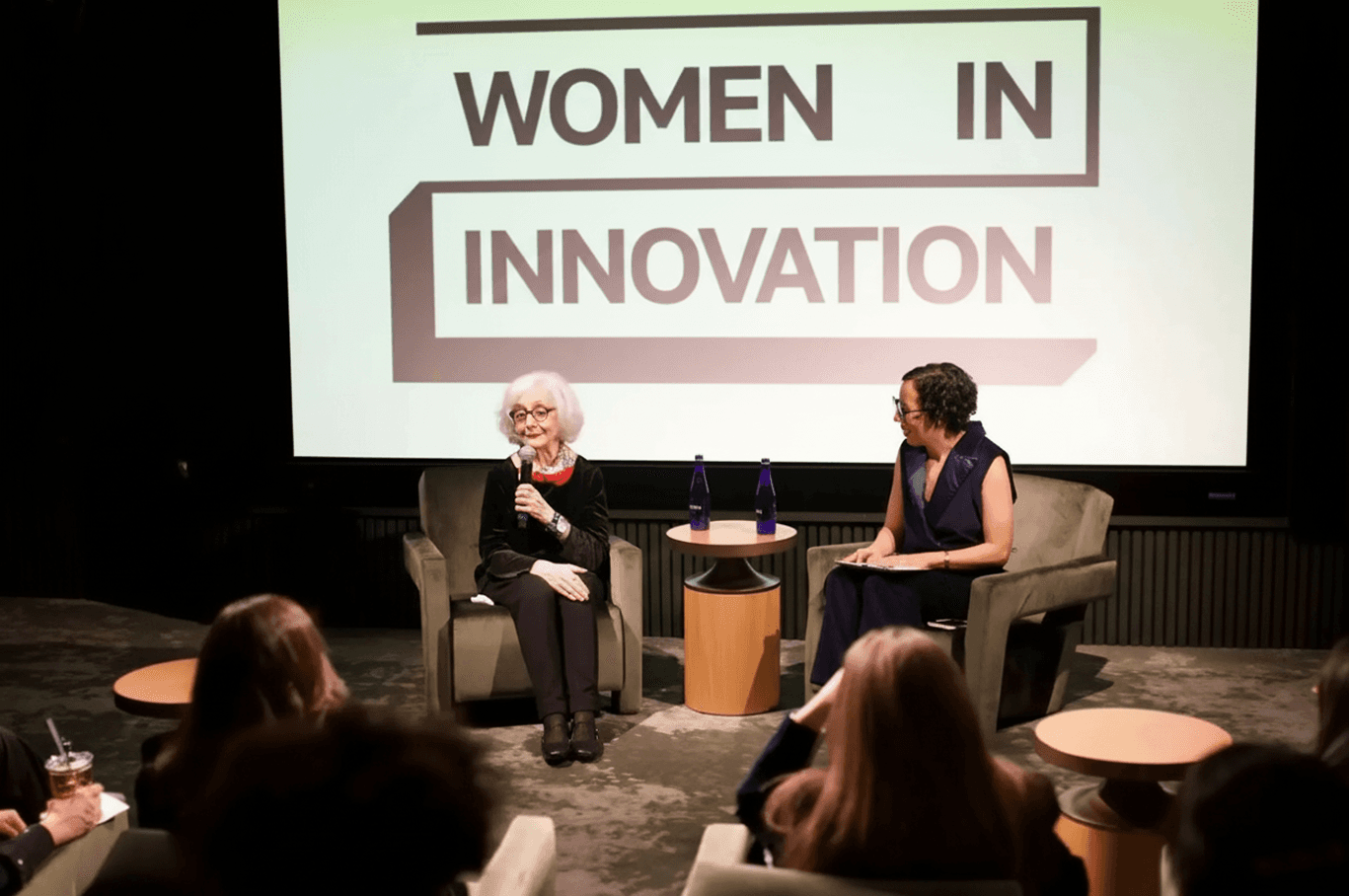
Women from across the healthcare and innovation sectors gathered for something rare: an intimate conversation with a living legend. Meg Crane, inventor of the first at-home pregnancy test, joined Women in Innovation for the inaugural event in our Salon Dinner Series—an evening designed to bridge past and present, to honor the pioneers who paved the way while celebrating the innovators shaping what comes next.
The salon format itself was intentional. Rather than a traditional panel or lecture, we convened at the NeueHouse Madison Square, and created space for depth, for storytelling, and for the kind of meaningful exchange that allowed us to come away inspired to make an impact.
The Invention That Changed Everything
Meg's story begins in the 1960s, working as a graphic designer at a pharmaceutical company in New Jersey. One day, walking through the laboratory, she noticed a rack of test tubes suspended over a metallic shelf—pregnancy tests the company performed for doctors. Something clicked.
"I thought, well, it looked like something could be put together—a few things involved—that women could do themselves," Meg recalled during the fireside chat.
She brought the idea to executives. Their response was immediate and dismissive: "No way. We'll lose our doctor business. How could you even talk about that?"
But Meg didn't let go. She couldn't. Because she knew the reality that most women faced in that era—and the reality was staggering.
At the time, women couldn't get a pregnancy test without a doctor's order. And often, that doctor would only perform the test if a woman's husband requested it. Even more concerning, many doctors would deliver the results to the husband first, not the woman herself.
"The encouraging thing were, actually, women my age, women I knew, who might want to know quickly if they were pregnant for any reason," Meg explained. That conviction became her North Star.
Crashing the Meeting
Years passed. Meg continued her work at the company, kept her idea alive, and waited for the right moment. Eventually, the parent company in the Netherlands caught wind of the concept and pushed the New Jersey office to move forward. But when it came time to design the product, the company decided to hire "professional designers."
Meg heard about a meeting scheduled with an external design firm. So she did what any determined innovator would do: she crashed it.
"I brought my prototype into the room, and they put theirs on this big conference table, and I put mine down," she said. The room filled with executives and three male designers from the hired firm. And then, the advertising team walked in.
One of the executives picked up her prototype and asked, "Well, this is the one you're using, right?” The executives quickly dismissed it, but after reviewing the other designs, the advertising team returned to Meg's and repeated: "This is still the one we have to use - it’s the only one that makes sense to use."
The company pushed back, claiming her design was too expensive. Meg, undeterred, took time off work, went to the Yellow Pages (this was the 1960s, after all), and visited manufacturers in the Bronx and Newark until she found one who could produce it. The cost? A third less than what the "professional" team had quoted.
Her prototype—crafted from a clear yellow paperclip holder she found in her desk drawer—became the foundation for the world's first at-home pregnancy test. She had engineered a shelf inside the box to hold the test tube and eyedropper, and angled a small mirror underneath so women could see the results without disturbing the sedimentation..
"That little box had a cap—you could use that to collect urine. Everything was all there. It was perfect. I was really, really lucky," Meg said with characteristic humility.
The Women Around the Table
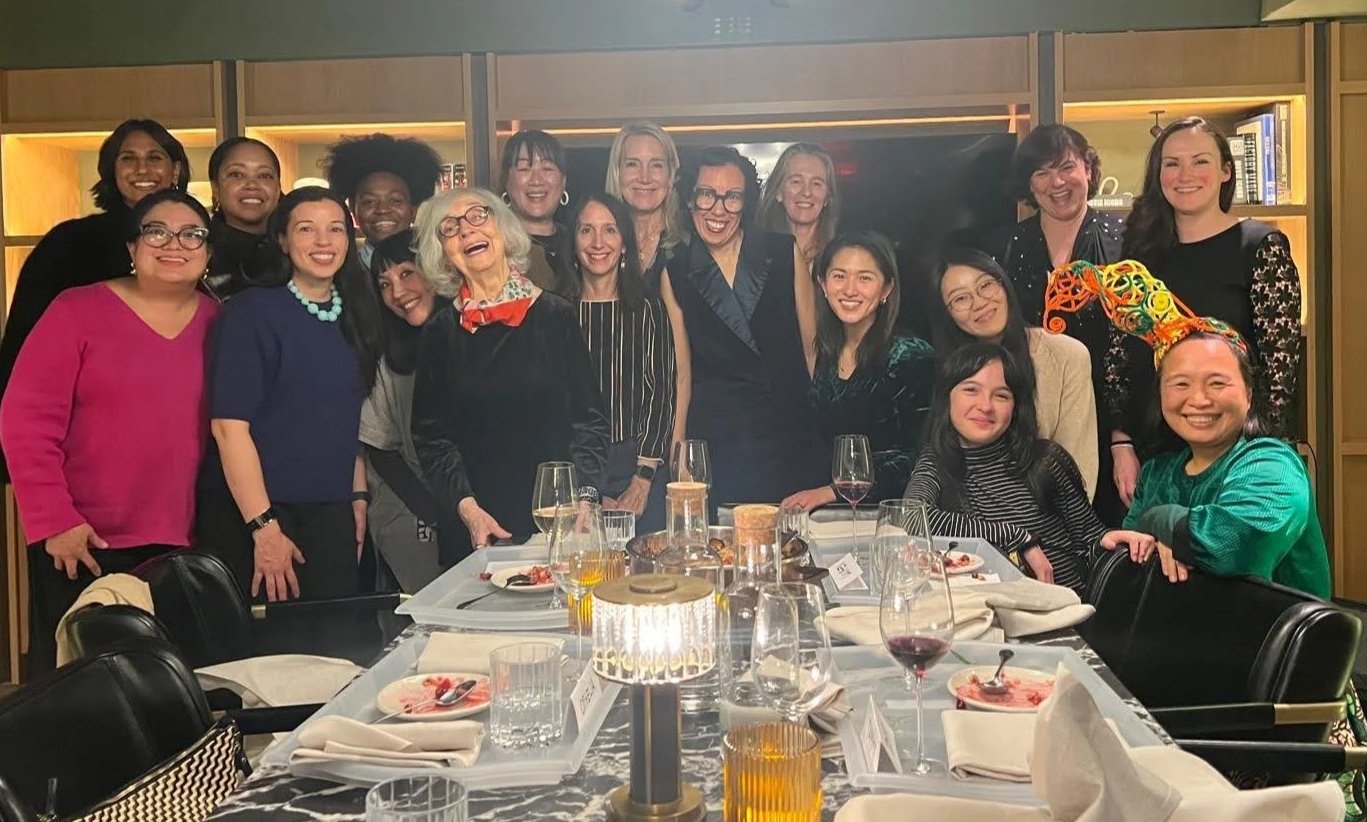
After the fireside chat, we transitioned into dinner—but not a typical seated affair. We rotated every twenty minutes, musical-chairs style, so that each woman had the chance to share her story and hear from others doing transformative work in healthcare innovation today.
Whether working in digital health, medical devices, biotech, or healthcare policy, the underlying dynamics remained familiar: the need to champion ideas against resistance, to navigate systems not built for them, to persist when the path forward wasn't clear.
But there was also hope. Because unlike Meg, who worked largely in isolation, the women gathered that night had each other. They had networks, mentors, collaborators. They had proof that change was possible because they were living it.
One attendee reflected on building AI-driven diagnostic tools. Another spoke about redesigning maternal health experiences. Several discussed the importance of centering patient voices in innovation, of designing not just for efficiency but for dignity—themes that resonated deeply with Meg's original vision.
The conversations wove between past and present, personal and professional, frustration and possibility.
Keep Going
Toward the end of the evening, Amanda asked Meg what advice she'd give to young women innovating today.
"I think it's necessary to hold your own. And more important, support each other. Boy, does that really matter. The more the better."
She encouraged finding like-minded collaborators, bringing people into your vision, and refusing to go it alone. "If you find an idea that you think would be usable, find somebody who's like-minded to go along with you, to promote it, and work with somebody who can be in the background to help you."
And then, the refrain that defined her journey: "Keep going. Keep going."
When asked if there were moments she wanted to give up, Meg was honest. The company's decision to hire other designers hurt. The constant pushback made her question whether she was on the right track. The isolation of keeping her work secret—designers were often discouraged from sharing ideas, even with family—wore on her.
But she kept going because she believed the product was necessary. "Nothing like this existed before, but I know certainly so many women I grew up with or worked with would like to know this. And for so many reasons."
That belief—that certainty that the world needed what she was creating—sustained her through every setback.
The future of healthcare innovation was in that room that night. And thanks to Meg, we all know a little more about what it takes to build it: conviction, community, and the courage to keep going.